
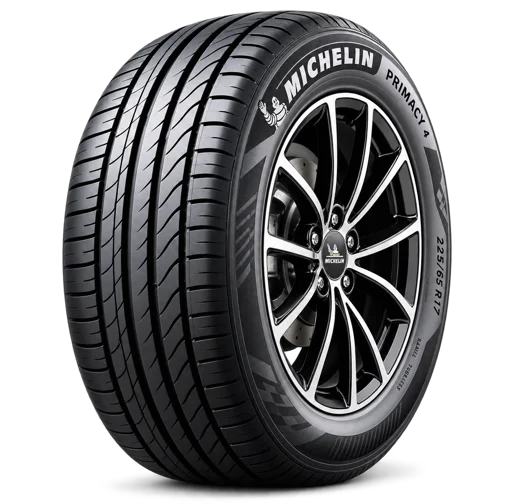
Tire Type
P = Passenger car, LT = Light truck. No letter usually means a European metric tire.
TIRE SIZE GUIDE
Your tire size is printed right on the tire. Learn where to look, what every number means, and shop the perfect fit in minutes.
STEP 01
Every tire has the same pattern of numbers and letters. Hover or tap each part to see what it means.
P = Passenger car, LT = Light truck. No letter usually means a European metric tire.
Width of the tire from sidewall to sidewall, in millimetres.
Sidewall height as a % of the width. Here the sidewall is 65% of 225 mm.
R = Radial, used on almost every modern tire. ZR marks some high-speed tires.
The wheel size this tire fits, in inches. It must match your wheel exactly.
How much weight each tire can carry. 94 = 670 kg per tire.
The maximum safe speed. H = 210 km/h. Match or exceed your original rating.
STEP 02
You'll find your size in any of these four places — no tools needed.
Look at the side of your current tire. The size is moulded into the rubber, usually after the brand and model name.
Most accurateOpen the driver's door and check the sticker on the frame. It lists the original tire size and recommended pressure.
Factory sizeThe tire and loading section of your vehicle manual lists every approved size for your model and trim.
All optionsSome vehicles print the tire size and pressure chart on the inside of the fuel door.
Quick checkIf your tires were changed by a previous owner, the sidewall and the door sticker may differ. When in doubt, go with the door sticker or ask our team.
STEP 03
Type the size from your tire and we'll turn it into real measurements — then show you tires that fit.
That doesn't look like a tire size. Use the format 225/65R17.
Passenger / metric radial tire
Shop 225/65R17 tiresQUICK REFERENCE
| Rating | Max speed | Typical use |
|---|---|---|
| Q | 160 km/h | Winter, light truck |
| S | 180 km/h | Family cars, vans |
| T | 190 km/h | Family cars, SUVs |
| H | 210 km/h | Sport sedans |
| V | 240 km/h | Sport & performance |
| W | 270 km/h | High performance |
| Y | 300 km/h | Supercars |
| Index | Per tire | Index | Per tire |
|---|---|---|---|
| 85 | 515 kg | 98 | 750 kg |
| 88 | 560 kg | 100 | 800 kg |
| 91 | 615 kg | 102 | 850 kg |
| 94 | 670 kg | 105 | 925 kg |
| 95 | 690 kg | 110 | 1060 kg |
| 96 | 710 kg | 115 | 1215 kg |
| 97 | 730 kg | 121 | 1450 kg |
GOOD TO KNOW
Still unsure? Our tire experts are happy to help you choose.
Ask an ExpertOnly sizes approved for your vehicle. A new size should keep the overall diameter within about 3% of the original so your speedometer, ABS and stability control stay accurate. Check your owner's manual or ask us first.
Usually yes. Some performance cars use wider tires at the rear — this is called a staggered setup, and the door sticker will list both sizes.
No. Always match or exceed the load index and speed rating shown on your door sticker. A lower rating can be unsafe and may affect your insurance.
Find the DOT code on the sidewall. The last four digits are the week and year it was made — 2321 means the 23rd week of 2021. Most makers recommend replacing tires after 6–10 years, whatever the tread.
When the tread reaches the wear bars (1.6 mm, the legal minimum in most places), or earlier for wet and winter safety — around 3 mm is a good rule. Also replace tires with cracks, bulges or damage to the sidewall.
FOUND YOUR SIZE?
Compare top brands and the best prices for your exact size.